Showing posts with label itinerary. Show all posts

Sunday, April 10, 2022

The Award-Winning Public Gardens of the Madison Fling


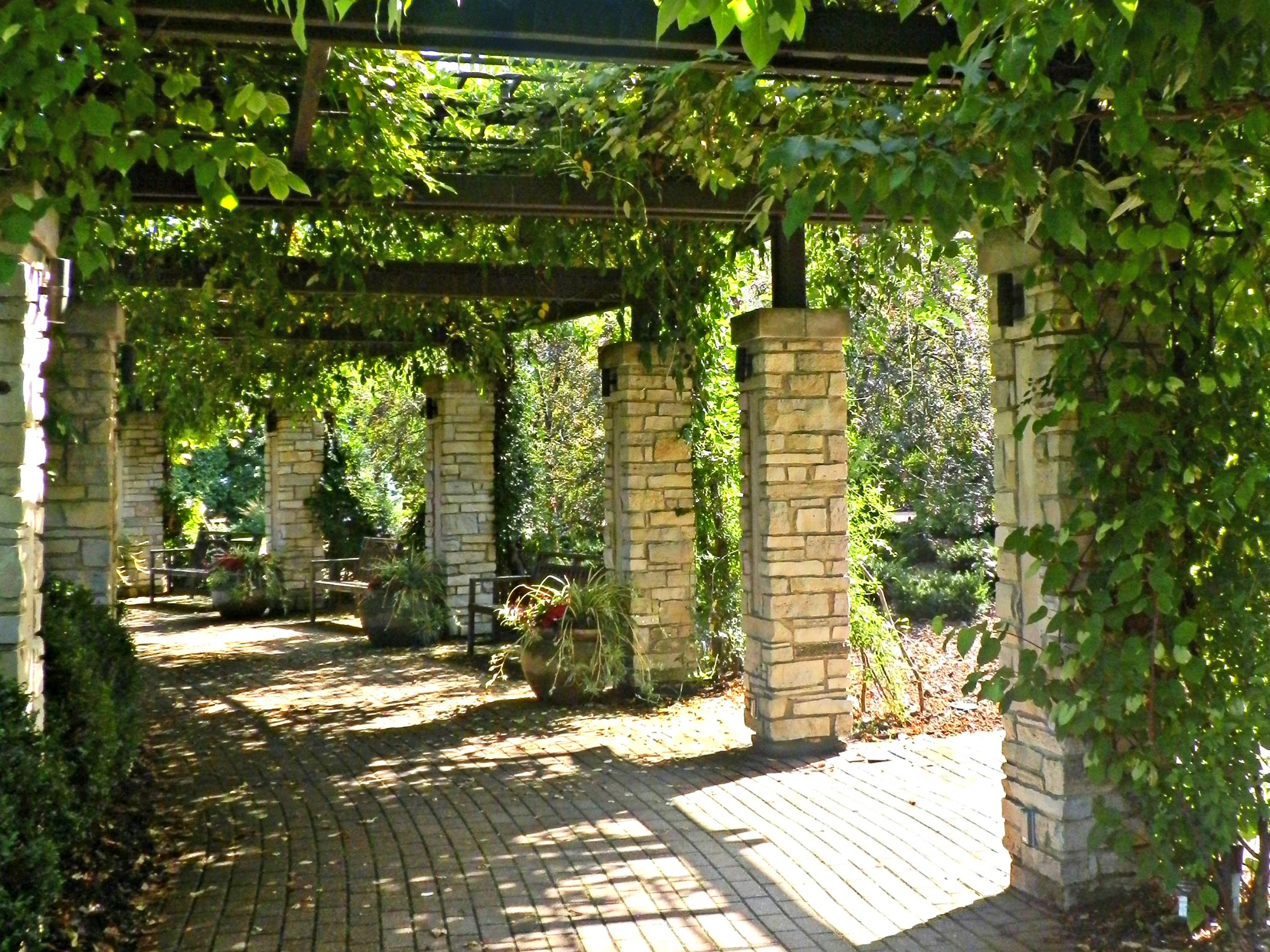
An arbor-covered walkway at Olbrich Botanical Gardens

We’ve recently reviewed the fabulous private gardens you’ll see at the Madison Fling in June, so let’s take another peek at the public gardens on our tour. (Click on the links below to learn more about each garden.)

We’ll start with The Urb Garden and the Rooftop Ramble at the Madison Children’s Museum, the venue for our opening gathering on Thursday evening, June 23. The Urb Garden is a three-season learning area on an outdoor deck. Visitors can learn about aquaponics in a tilapia tank, watch worms turn food waste into rich compost, and observe plant growth in the custom greenhouse-treehouse. And from the Rooftop, visitors get a bird’s eye view of downtown Madison.

Metal archway into UW-Madison Arboretum's
Longenecker Horticultural Gardens


On Friday, June 24, we’ll head to the UW-Madison Arboretum, home of the world’s oldest restored prairie, the Longenecker Horticultural Gardens, the native plant garden including approximately 500 native Wisconsin plants, and an extensive collection of other restored ecosystems. The Arboretum is an oasis of nature surrounded by urban and suburban areas.


Gravel gardens at Epic Systems gardens


Our final Friday destination is Epic Systems gardens, near the suburb of Verona. Epic is a leading healthcare industry information technology company, and the second-largest employer in the Madison metro area. Its campus gardens are whimsical and unique—like a playground of garden types and styles. Epic is on the edge of Wisconsin’s Driftless Area, too, so the views of the surrounding countryside are dramatic.

The Thai Pavilion at Olbrich Botanical Gardens


Saturday midday, June 25, takes us to Olbrich Botanical Gardens, voted one of the top 10 most inspiring gardens in North America by Horticulture magazine. Olbrich’s 16 acres include an indoor, tropical conservatory, and outdoor sunken, perennial, herb, meadow, rock, wildflower, rain, serenity, shade, hosta, birch, rose, and event gardens.

Olbrich’s Thai pavilion and gardens, tucked beyond a winding pathway, are must-see features, too. The Thai pavilion was a gift to the University of Wisconsin-Madison from the Thai government and the Thai chapter of the Wisconsin Alumni Association.
Mixed plantings at Rotary Botanical Gardens


On Sunday, June 26, we drive south, with a stop at Kopke’s Greenhouse, home to plentiful annuals and perennials.

Our midday destination is Rotary Botanical Gardens, in Janesville, Wis. Rotary is a 20-acre, nonprofit community garden, and a National Display Garden for the American Hosta Society, the American Hemerocallis Society, and the Hardy Fern Foundation. It features 26 distinct garden themes and more than 4,000 types of plants.

Train display at The Flower Factory


On the way back to Madison, we’ll stop in at TheFlower Factory, formerly a public garden and once the source of the Midwest’s largest selection of perennials, hostas, and ornamental grasses. The owners still garden, and we’re honored to visit their expansive property.


Victorian house at Allen Centennial Garden


Our final event of the Fling, on Sunday late afternoon, is a visit to Allen Centennial Garden, a cozy 2.5-acre garden in the heart of Madison. The garden is built around a stately Victorian gothic house, which was one of the first buildings on the UW-Madison agricultural campus and served as home for the first four deans. Though compact, this garden is divided into 14 distinct areas. It serves as an outdoor classroom for campus students and visitors, alike.

Our thanks goes out to the personnel at all of these amazing public gardens. They all are wonderful Madison-area treasures!


Visit this link to register for the Madison Fling!

Saturday, April 2, 2022

Sunday's Private Gardens: Colorful, Charming, and Creative


[Note: Dates have been changed for the 2022 Fling. Gardens may vary slightly.]

We’ve previewed the Madison gardens we’ll visit on Friday and Saturday. On Sunday, June 26, we’ll head east and southeast to visit a garden on Madison’s isthmus, a garden in the suburb of Monona, and two gardens in the small city of Stoughton.


Jane and Duane Miller have an urban garden within Madison’s isthmus that showcases very creative use of a small lot. During the growing season, they repurpose their driveway as a pathway and patio into the garden. Plants in rolling pots—along with garden furniture, portable fences, planters, and umbrellas—come out to form a wonderful dining and entertaining space. “Since many things are on wheels,” says Jane, “we can rearrange spaces or create a parking spot if needed. A wood pergola on one side and a secret garden nestled between two garages in back form the other garden rooms in our space.” The couple’s colorful bowling ball collection lines the front garden. Arbors and fencing divide the property into gardening “rooms” filled with colorful annuals, dramatic foliage plants, and decorative surprises around every corner.


Ann Munson has planted more than 220 trees and shrubs, and untold numbers of perennials and annuals, since 1980, in her ¾-acre suburban property. Free of traditional grass lawns, the gardens of sun and shade are connected with rock, stone, and wood chip paths. Two ponds and a connecting stream provide water for wildlife and stimulation of the senses. “I recycle as much from the land as possible, and recycle interesting items as I find them,” says Ann. “My gardens allow me to participate in the ongoing cycle of life—seeking beauty, health, and creativity. I want there to be mystery, excitement, interaction, and health in the garden. I want color, design, natural critters, and the flow of the seasons made real. I want to look out my window at a natural world, and step out my door and do a forest bath.”


Jim Ottney and Jay Hatheway have gardened at their Stoughton home since the mid-1990s. When they bought the house, the “yard” was an untended field of weeds, an oil change sand pit, piles of old tires, clotheslines, volunteer trees at random locations, and various invasive plants. They turned over the entire lot by hand, and beginning with several small beds along the fringes and foundation yews, they transformed the lot. The entire garden is laced with pathways and seating areas, incorporating a newer central pergola over the original patio, a metal gazebo in the back, a deck overlooking the entire garden, garden art distributed throughout, and a flagstone open space in one section. “Gardens can be whatever you imagine,” notes Jim. “We wanted a private escape and a space where we could entertain small groups of friends. We worked within the limits we were given and discovered ways to use foliage variety to create interest.”


Janet Aaberg’s property had just one tree in the back and one in the front when she moved to her home in 1992. “I added a few shrubs and flowers, but it wasn’t until 2000 after a life-changing event that I really started digging,” she says. “Each year, I either enlarged an existing bed or dug up a new one, and I now tend to 18 large perennial beds.” Janet has a diverse selection of perennials including 32 varieties of Clematis, most of which should be blooming when we visit. “You’ll also see garden art mixed into each garden,” she adds. “I have a very sunny, hot location, and with years of planning, I have something blooming from April through November. My slice of paradise is not only good food for the soul, but also for the critters, pollinators, and insects.”

Our private gardeners are looking forward to your visit! Stay tuned for more planned highlights of the 2022 Fling. (Note: This schedule may change; we will keep you updated here and on the Fling Facebook page.)

Monday, March 28, 2022

Rotary Botanical Gardens: Good Enough to Show the World!


One of the public gardens we'll visit during the Fling—on Sunday, June 26—is Rotary Botanical Gardens, in Janesville, Wis., slightly southeast of Madison. Fling team member Mark Dwyer was the director of horticulture of this impressive garden for 21 years, and shares some of its history and uniqueness:

I was fortunate to work at this wonderful Janesville botanical garden for 21 years (1998-2019) as director of horticulture, and I found my true passion for public horticulture during my tenure at this garden. I enjoyed watching the increasing attention, visitation, and accolades that Rotary Botanical Gardens received—due, not only to the garden developing and expanding, but also through the monumental community support and significant volunteer efforts. These efforts continue to be essential to the success of this 20-acre, nonprofit garden. It has more than 100,000 annual visitors, not including attendance at special events.

The Wellness Garden
The gardens began as an idea by Dr. Robert Yahr (1928-2021), a retired dentist and orthodontist in Janesville. He had walked the site of what would later become the gardens, and formulated a vision for an internationally themed community garden that would be “good enough to show the world” (in his own words!).

What makes his vision all the more amazing is that he was walking on a derelict, 15-acre piece of land owned by the City of Janesville that was the site of an old sand and gravel pit. Situated on some small ponds that were created when mining operations hit natural springs, the land was strewn with garbage, discarded picnic tables, trash barrels, and more significant debris that had simply been dumped on site. Also on the property were the remnants of an old BMX bike track situated near an abandoned building that was the original offices for the Wilcox Sand and Gravel operation in the early 1900s. That building was slated for demolition.

Dr. Yahr approached the City of Janesville in 1988 with, not only his vision for a garden (and renovating the Wilcox building), but also some of his own money, additional donor support, and the commitment of both Rotary Clubs in Janesville to help clean up the land and begin what would be called Rotary Botanical Gardens Inc. The organization was given a 100-year lease on the land for $1 from the City of Janesville. And the gardens were officially opened in 1989, with massive community clean-up efforts (including the ponds), tree planting, and the renovation of the old building, which would become the Rath Environmental Center (it was the visitor center for the first 10 years).

Dr. Yahr was a juggernaut of fundraising. He secured help from area construction firms to help clear the site, bring in topsoil, remove overgrown trees, and clear debris from the pond. The early efforts of both Rotary Clubs were instrumental in many of these efforts, as well, and additional support at this time was provided by nearby General Motors Company (jobs bank program) and the Wisconsin Conservation Corps.

As an old sand and gravel pit, the land is very well-drained, but the lean soils called for more than 4,000 cubic yards of good soil to be brought on site and distributed in what would shortly become the start of the international gardens. The initial 15-acre garden grew to 20 acres in 2011, with the creation of the new, $2 million Parker Education Center with funds from the Parker Foundation (Parker Pen was an original Janesville-based company). The new maintenance building, holding yards, and support area also were added at this time.

The Japanese Garden
The gardens developed quickly in those early years, and were reliant not only on “in-kind” donations but also heavy involvement of volunteers, which continues to this day. It’s important to note that the overall mission of the garden revolves around horticultural education and appreciation. The gardens provide significant educational opportunities—through both adult and youth education, symposia, various lecture series, and strong labeling initiatives.

Dr. Yahr’s vision of internationally themed gardens began with the simultaneous construction of the Japanese Garden (ranked one of the top 25 in North America), formal gardens, and the gazebo garden. Over many years, different thematic gardens were added to create a series of garden rooms and experiences. While not all the garden spaces have an international theme, they do each reflect a style and/or specific plant palette. Other gardens include the English cottage garden, sunken garden, woodland walk garden, and the relatively new, all-accessible wellness garden. To date, there are 26 distinct garden themes and garden displays with more than 4,000 types of plants.

Rotary Botanical Gardens has won many awards for plant collections and displays. It continues to be a National Display Garden for the American Hosta Society, American Hemerocallis Society, and the Hardy Fern Foundation. The fern and moss garden (constructed in 2006) has one of the largest fern collections in the country. At one point, the gardens featured more than 150,000 annuals each year in rotating, creative displays. More recent years have seen the important shift to promoting more water-wise and eco-friendly gardening with native perennials.

Rotary Botanical Gardens hosts more than 80 weddings on an annual basis, in addition to many other events. The very popular Holiday Lights Show (1 million lights) brings in more than 50,000 visitors each winter, and continues to be the largest fundraiser for this garden.

Rotary Botanical Gardens receives no local, state, or federal support, and is reliant on income from its Friends membership program, a growing endowment fund, admissions, rentals, special events, grants, and other donations. The staff has grown over many years, although the importance of volunteers assisting with gardening, special events, and much more continues to be the primary cornerstone that links the past, present, and future of this amazing small garden.

The vision of one person, combined with a supportive community, has finally achieved Dr. Yahr’s original vision of having a “community garden good enough to show the world!”


Visit this link to register for the Madison Fling!

Thursday, March 24, 2022

Saturday's Private Gardens: Impressive Urban Retreats


[Note: Dates have been changed for the 2022 Fling. Gardens may vary slightly.]

Tours of private gardens are huge highlights of any Fling. Earlier, we previewed the Friday gardens; now let’s take a quick look at the private gardens we’ll visit on Saturday, June 25. These are on the West and near-West side of Madison.


Sue Niesen “started playing in the dirt in 1975" and continues to "love finding worms.” Her gardens include perennials and annuals that she grows in her sunroom from harvested seed from the previous year. “Of course seed catalogs contribute with new species, as I’m curious how they’ll look and grow in my setting,” she describes. “Some not so successful…but I’m always looking for new varieties to add to the gardens.”

Because of the early indoor start, even large plants like Brugmansias bloom in early summer in her garden. Each year, she features a particular annual throughout the garden—something to watch for when we visit. Sue and her husband, Dick, created all the large concrete stepping stones in their garden, themselves, over the course of a year. Whimsical garden gnomes and decorations are found throughout, and you'll find surprises around every corner.


Tom and Cheryl Kuster moved to their home in 1990. The yard had been professionally landscaped in 1968 when the house was built, including a small pond and waterfall. Tom says he didn’t get serious about gardening until 2004 when he asked a local landscape designer to create a plan. “As I started working on the plan and studying various plants, I was amazed at the vast array of plants available for landscaping.

“During the past 16 years of gardening, my focus has been on diversity,” he adds. “You might call me a collector of plants, with more than 600 different varieties. I’ve divided our yard into 20 sections—each with its own genera of species.” Areas include miniature and dwarf conifers; a Tufa rock garden with various alpines, hens and chicks, and woodies; and a Japanese garden.


Linda Brazill (also a garden blogger at Each Little World) and Mark Golbach moved to their half-acre lot 25 years ago. Linda describes it as “a perfect canvas on which to create a garden: a sloping site with trees and shrubs mostly at its edges.

“Our goal was to walk out our back door and be in a tranquil retreat that married the rocks, water, moss, and contemplative qualities of Eastern gardens, with the pines and perennials of Wisconsin,” she adds. To do that, the couple planted some 200 trees and shrubs, and used more than 200 tons of stone in walls, paths, and boulder groupings. Their garden has multiple water features, unusual trees and conifers, a birch glade, woodland peonies, a traffic island bed, and a Japanese teahouse. “As we’ve worked to create our retreat,” says Linda, “we’ve also created a gardening partnership that has been a mutual source of heated debates and delight.”


Cindy Fillingame acknowledges that all gardens are shaped by the terrain, exposure to sun, and drainage concerns, and hers is no exception. A desire to improve drainage led to her first raised bed in 2004. “I chose concrete retaining wall blocks as an inexpensive ‘do-it-myself’ solution,” she says. “They proved to be very versatile, allowing me to create fluid lines, and to adjust the height and enrich the soil. This initial success has led to other raised beds designed to solve other issues—namely gardening on a severe slope and defining the property line more clearly.”

As Cindy’s gardening knowledge has grown, she’s tried to create diverse garden beds with something to offer in each season of the year. The garden features many newly planted trees and shrubs, including ginkgo, oak leaf hydrangea, pagoda dogwood, beech, and stewartia. Older established trees and shrubs include river birch, Montgomery spruce, and a sprawling juniper pruned to follow the terrain. Lilies, including Martagon, Asiatic, and Orienpets, join garden sculptures to provide vertical accents among a wide variety of perennials.

Stay tuned for more overviews of the other private and public gardens to be featured as part of the 2022 Fling. This schedule may change; we will keep you updated here and on the Fling Facebook page.)

Visit this link to register for the Madison Fling!

Wednesday, March 16, 2022

A Renowned Destination for Midwestern Gardeners


On Sunday, June 26, we’re honored to be visiting the Flower Factory, near Stoughton, Wis., southeast of Madison. Long a favorite regional destination for gardeners, the Flower Factory, at one time, boasted the Midwest’s largest selection of perennials, hostas, and ornamental grasses. Here are Fling team member Mark Dwyer’s recollections of his first impressions of the Flower Factory and the joy of visiting this special place:


I moved to Janesville, Wis., in the summer of 1998 to start my job as director of horticulture at Rotary Botanical Gardens (RBG). Kim Emerson, the executive director at the time, wanted to introduce me to area growers and nursery folks, which certainly made a lot of sense. It was an enjoyable “whirlwind” of travelling for three days around Southern Wisconsin and Northern Illinois to connect with many amazing people, many of whom are still close friends. This tour culminated with a stop at The Flower Factory near Stoughton, Wis. Kim had mentioned that I wouldn’t believe this nursery when I saw it. That was the understatement of the century.

We pulled up to a rustic set up of hoop houses, greenhouses, barns, outbuildings, and an ornate old house with a rustic gravel drive and parking lot. The nursery was nestled nicely amongst the landscape, with display gardens, vegetable gardens, garden railways, and so much more. I met welcoming owners David and Nancy Nedveck that day, and continue to be amazed by their horticultural knowledge, generosity, and affability.

That was the first nursery I ever visited with more than 3,000 perennial varieties (at that time) available for purchase. As I explored all the retail houses, featuring an amazing array of selections, I realized that not only was this a special place, but the proximity to RBG (35 miles) would be beneficial for the botanical garden (and my home garden of course!). That certainly became the case as I relied on this nursery for my more than two decades at RBG. The Flower Factory became an amazing resource (and frequent supporter) for the gardens and me, professionally and personally. More than 90% of my perennials still flourishing in my home garden were from this nursery!

I recently asked Nancy about some of the nursery’s history, which I found fascinating. Of course, the story begins with the combined passion that Nancy and David have for plants, along with a desire to be self-employed.

The Flower Factory was officially started by Nancy and David in 1984, primarily as a source of plant material (annuals, perennials, vegetables, and cut flowers) to be supplied at the well-known and amazing Dane County Farmer’s Market (which we’ll also visit during the Fling!). David still sells select plants at this market throughout the growing season!

They opened the larger nursery in 1988, and Nancy mentioned that early transactions were made in cash, checks, and IOUs—all gathered in a cigar box. Unsurprisingly, this immediately popular nursery grew by leaps and bounds, and doubled in size a couple of times, to ultimately feature 35 structures over eight acres, including 11 greenhouses, four shade structures, and 25 employees. A point-of-sale system was installed in 2004, and receiving and perusing the annual catalog was a winter expectation for thousands of gardeners.

Peak offerings, in terms of varieties, were more than 4,000; although scaled down to around 2,500 selections during the last years of the business. Grabbing a wagon(s) and filling it to the brim was always a joyful experience at The Flower Factory.

The nursery closed at the end of August 2020, much to the distress and dismay of literally tens of thousands of customers. The customer base for The Flower Factory extended well beyond the immediate area, and the nursery was a common stop for bus tours interested in a buying spree! Nancy and David were also very active in providing educational programs and supporting area botanical gardens and the green industry in many ways.

Nancy and David still live on the property, and they garden as time allows in their pseudo-retirement. They’re in the process of downsizing their gardens, which they describe as being “in flux.” They’re focusing more on woody plants and less on an ordered appearance; allowing chaos and a bit of messiness to add personality! I asked Nancy what she observed in terms of garden trends over the years, and she described noting gardeners and gardens focusing more on diversity, incorporating native species (finally!), and interest in the collective ecosystem. From a consumer’s perspective, she also observed increasing interest in larger pot sizes and more established plants for instant impact.

Nancy’s life advice: Always be curious, embrace change, cultivate friends, relax in your garden, and listen to the birds!


Visit this link to register for the Madison Fling!

Saturday, March 12, 2022

Friday's Private Gardens Feature Pathways, Ponds, and Prairies


Linda and Phil Grosz's pond
[Note: Dates have been changed for the 2022 Fling. Gardens may vary slightly.]

We’re thrilled to share some amazing private gardens at the 2022 Fling! Three days aren’t enough to tour every noteworthy garden in the Madison area, but we did our best to cover three general areas:

  • Friday, June 24, we’ll start on the far west and southwest sides of Madison—touring Middleton and Fitchburg gardens;

  • Saturday, June 25, we’ll move a little closer in to the city of Madison; and

  • Sunday, June 26, we’ll venture to the east side of Madison and Monona, then southeast to the small city of Stoughton.

Friday’s gardens present a pleasant mix of gardening styles and types—from edibles to ornamentals, prairies to woodlands, pathways to ponds, and everything in between.


Rita Thomas began gardening at her Fitchburg garden 35 years ago. “I knew nothing about plants or garden design,” she admits. The garden grew and changed as she learned. Rita describes herself as “a plant collector, seeking out the unusual, the best of the species, or the latest introductions. My major interests have been native woodland plants, daylilies, and irises.”

Rita has an extensive collection of daylilies. Her most recent interests are herbaceous and tree peonies: She recently added 20 new tree and 15 herbaceous peonies to the garden. About 14 of her tree peony grafts and many peony seedlings can be found in her nursery beds. “The garden has been my retreat, my laboratory, and my playground,” she describes. “Tending my garden rejuvenates my spirit and my physical body. I welcome all guests to share in my joy.”


Cherith Bruckner’s shady gardens are woven throughout wonderful hickories, oaks, and black walnuts on a corner lot. “The gardens have taken shape gradually over the past 20+ years—from our first efforts of pulling blackcap raspberry brambles and weeds to what has grown into a passion to enhance the woodland setting,” she says. “A lot of ‘terraforming’ played a role in creating a ‘natural’ setting for a water feature that includes a stream, a waterfall, and a pond.”

Over any one of three bridges lie plants and structures, crags and crevices that hold countless surprises and rewards. Vignettes of many shade-loving perennials and shrubs continue to evolve along the woodland paths and water elements. Gardens in the front provide a home for more sun-loving shrubs and perennials, including irises, lilies, and daylilies.


Betsy True and Danny Aerts describe their one-acre property as “the functional yard. We’ve been gradually improving it with garden, orchard, and woodland settings. A large, fenced vegetable garden occupies the main center.” They are “serious about vegetables—using  market garden techniques, raised beds, rotation, elevated bins, and containers.”

Pears, quince, espaliered apples, and various small fruits are distributed around the garden. There are chickens at one end of the yard and bees at the other. A prairie covers the side yard, and a pond lies just off the sun porch on the other side. “There are many diverse micro-environments,” explains Betsy. “We landscape with an eye for insect nutrition and habitat, extended bloom for the bees, habitat for small animals, and edibles for the house. It’s a work in progress and a joy to keep improving and trying new things.”


Linda and Phil Grosz built their home 22 years ago. “Our goal was to transform our large, vacant lot into a beautiful, tranquil, and wildlife-friendly environment,” describes Linda. “Our first project was planting an acre of native prairie.”

Grown entirely from seed, the prairie soon surrounded the yard with an abundant and colorful mix of wildflowers and grasses. A stream cascading into a large pond was the next landscape feature they installed, and it has become the focal point of the back yard and a magnet for visiting birds. “Over the years, we’ve added thousands of spring bulbs and perennials, large shade and hosta gardens, as well as a rock garden, herb and vegetable gardens, and a new miniature garden,” she says. “We’ve also assembled a diverse collection of conifers, Japanese maples, and garden art. Join us on the back deck, and enjoy the view of our pond, prairie, and the adjacent golf course.”

Stay tuned in the weeks ahead for overviews of the other private and public gardens to be featured as part of the 2022 Fling. (Note: This schedule may change; we will keep you updated here and on the Fling Facebook page.)

Visit this link to register for the Madison Fling!

Friday, January 21, 2022

Onward With the Madison Fling!

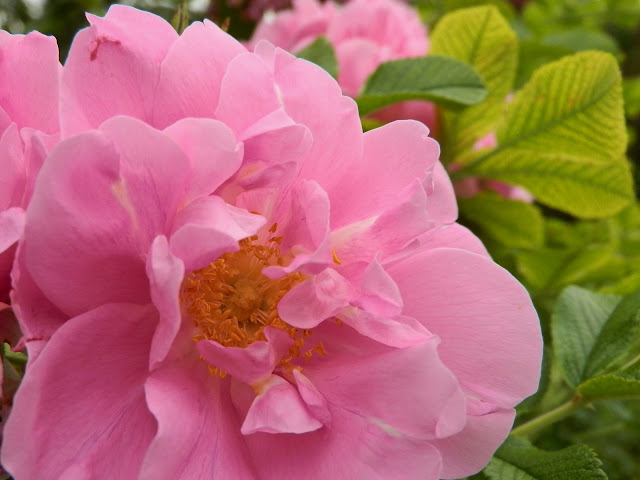
Rosa rugosa 'Jens Munk,' among the many roses that might be blooming
during our visit to Olbrich Botanical Gardens; just one highlight of the Madison Fling.

As we mentioned in our last post, the Madison Fling planning committee is committed to continuing with our event this June. This Fling may be somewhat different than past ones, but we’re ready to take on the challenge. We’ll be outdoors, vaccinated, and together during a safer time of year, so onward!

Registration will open soon!
If you’ve already registered, you’re all set with a discounted price. No need to pay more. For new registrants, as in the past, early preregistration is offered to former/future planners and board members first. And then, as of 2022, registration opens to not only garden bloggers but also Instagrammers, podcasters, and YouTubers.

Watch for a post soon with information on how to register, who qualifies, information on booking hotel rooms, and more.

How will registration work?
When registration opens, we'll post an announcement here on the website and on our Facebook page. We’ll ask you for specific information, and then we’ll share a link to our registration site and how to register. After you complete your registration, you'll be led to the reservation page for our official Fling hotel, where you can reserve a room at the special Fling rate.

What are the dates, and where will it be held?
The 2022 Garden Bloggers Fling will be held in Madison, Wisconsin, on June 23-26, 2022.

How can I learn more about the Madison Fling?
Visit this link, and stay tuned to this website for updates in the coming weeks.

Stay healthy and happy, and watch for more information very soon!

Monday, August 2, 2021

Links to Learn More About the Madison Fling


The Dane County Farmers Market: a highlight of summer in Madison,
and sure to be a highlight of the 2022 Fling on Saturday morning, June 25, 2022.


The Madison team is excited to host you next summer, June 23-26, 2022!

If, at any point, you have questions about the Madison Fling, you can click on the “2022 Madison” tab at the top of this website, or visit this link: Madison Fling.

While some of our private gardens are shifting a bit, you can learn about most of them by visiting these links: Friday Private Gardens, Saturday Private Gardens, Sunday Private Gardens.

During the next months leading up to the Fling, stay up-to-date and watch for more posts about Madison and surroundings by following our Fling Facebook page and our posts here. Check our posts in the “Blog Archive” (to the right; below) from September 2019 through February 2020, before COVID hit. We’ll be adding so much more in the months ahead!

And if, at any time, you have any questions, contact us at madisongbfling@gmail.com. Can’t wait to see you all in Madison next summer!

Thursday, February 4, 2021

Once Again, We Must Reschedule the Fling: Plan for June 23-26, 2022


Dori, CC BY-SA 3.0, via Wikimedia Commons

Dear Friends: Unfortunately, we’ve had to make the tough decision to postpone the Madison Fling yet again. While we’d hoped the COVID-19 pandemic would be long past us by June 2021, unfortunately it looks like we’ll still be dealing with its many ramifications well into the summer.


And again, the Seattle/Puget Sound committee has graciously offered to reschedule their Fling to 2023.


So our new dates are Thursday, June 23, through Sunday, June 26, 2022. Most aspects of our itinerary will remain the same. Thank you for your patience. Stay tuned for more updates—here and on our Fling Facebook page. 


Here's the new logo: You can click on it to download it.


We hope to see you all in Madison during the summer of 2022. Here’s to better days ahead! Thanks for your support, and we wish you all good health!

Thursday, April 2, 2020

New Dates for the Madison Fling: June 24-27, 2021


Wisconsin State Capitol
Justjeffaz (Jeff Brunton) [CC BY-SA 4.0 (https://creativecommons.org/licenses/by-sa/4.0)]

The Madison Fling is officially postponed to 2021 due to the COVID-19 pandemic. The Seattle/Puget Sound committee has graciously offered to reschedule their Fling to 2022.

So, our new dates are Thursday, June 24, through Sunday, June 27, 2021. Many aspects of our itinerary will change, but many will be similar. We'll take a break from planning for the time being. Stay tuned for more updates—here and on our Fling Facebook page.

We have two logo options that you can download to share on your blogs. One started out as an April Fools' joke, but we think it's fun. The other is more traditional. Feel free to use one or the other or switch them out as you please. (You can click on them, and then download the images.)


We hope to see you all in Madison during the summer of 2021. Thank you all for your support, and we wish you all good health!

Monday, January 20, 2020

Saturday Morning at the Dane County Farmers' Market


We're changing things up a bit for the Madison Fling's Saturday morning schedule, June 25.

Instead of loading our buses first thing in the morning, we'll have some "free" time to explore the Dane County Farmers' Market, conveniently located a block from our hotel—along the tree-lined grounds surrounding the Wisconsin State Capitol building. This area is referred to "the Square" in Madison. The Market encircles the Square.


The grounds surrounding the State Capitol are an ideal site to host the market. The magnificent landscape and stunning architecture serve as an impressive backdrop.

The Dane County Farmers' Market is the largest producers-only farmers' market in the U.S. It's been going strong since 1972, when the mayor recognized a need to unite two strong cultures in the county—rural and urban—to allow city dwellers to reap some of the county's agricultural benefits. All products are Wisconsin-grown. As a producers-only farmers' market, vendors are limited by their production and harvest yields, so they sometimes sell out of items.


Get there early (the market opens at 6:15 a.m.) and you'll get the best selection. Also, it gets very busy, so you'll want to allow enough time to explore before our day's other events begin. (We expect to load buses mid-morning: exact times to be published later.)

What can you expect to find at the market? The season's best bounty of vegetables, fruits, flowers, meats, cheeses, baked goods, and specialty products from approximately 200 vendors. Market producers regularly receive national and international recognition for the quality of their products.


When you visit the market, you can get to know the people who grow, raise, and produce the food and other products offered. The vendors behind the tables are the most knowledgeable resources for their specific areas, and they welcome questions. Bring your own bag, or you can buy a souvenir bag at the market.

When you arrive at the market, you'll see that the flow of foot traffic heads in one direction around the square. It's recommended that you follow the crowd, and walk with the vendors on your right-hand side. Another tip: Be prepared for fun, and allow yourself a little time to just sit (there are plenty of spots around the perimeter and on the capitol grounds) and watch the people go by.

Monday, August 5, 2019

Mark Your Calendars: June 18-21, 2020
Garden Bloggers Fling in Madison, Wisconsin

Wisconsin State Capitol
Justjeffaz (Jeff Brunton) [CC BY-SA 4.0 (https://creativecommons.org/licenses/by-sa/4.0)]

Get ready to Fling in Madison, Wisconsin! The Madison area is a meeting place: It’s roughly where the Eastern hardwood forests meet the prairies; where the edge of the glaciers morphed the land and melted, leaving a series of five lakes; and where garden bloggers will meet in 2020 for the Garden Bloggers Fling!

While the soil in the area varies somewhat, Dane County soil is among the most productive in North America. Many gardeners here are blessed with excellent silt loam soil as a base for their plantings. While Wisconsin is America’s Dairyland, the state also ranks first in the nation for snap peas for processing, cranberries, ginseng, mink pelts, dry whey for humans, milk goats, and corn for silage, among other crops.

So, it’s an excellent place to grow things! And an excellent place to gather and visit gardens together!

The horticultural gardens at the UW-Madison Arboretum
Plan to join us for three full days of garden touring, plus an opening event Thursday, June 18, afternoon/evening. Please check here for eligibility guidelines. More details on the hotel, registration, gardens, special events, sponsors, and more, will be posted here in the weeks ahead. All announcements will be posted on this blog and on the official Fling Facebook page.

Just to tease you with a preliminary itinerary (times and places may change):


Sculptures and gravel garden at Epic Systems
Friday, June 19, we’ll start out visiting private gardens and then we’ll enjoy lunch, a short presentation, and tours at the UW-Madison Arboretum, home to distinct garden collections, including horticultural gardens, prairie and woodland restorations, a native plant garden, and more. In the afternoon, we’ll visit more private gardens, and then head to Epic Systems for a tour of the company’s very unique outdoor gardens, led by Jeff Epping, one of the Epic lead landscape designers.


The Thai Pavilion at Olbrich Botanical Gardens
Saturday, June 20, enjoy a leisurely walk around the Wisconsin State Capitol building at the Dane County Farmers Market, America’s largest producers-only farmers’ market. Then we’ll load the buses for a delicious brunch before visiting the award-winning Olbrich Botanical Gardens, voted one of the top ten most inspiring gardens in North America by Horticulture Magazine. We’ll round out the day with more private garden tours. (Our event banquet and auction likely will occur on Saturday or Sunday. Stay tuned for updates.)


European-style garden at Rotary Botanical Garden
Sunday, June 21, begins with private garden tours and a trip to The Flower Factory, Wisconsin’s premiere hardy plant nursery, featuring a large selection of perennials, hostas, and ornamental grasses. Next, we’ll take a quick drive to Janesville, Wisconsin, to visit Rotary Botanical Gardens, a 20-acre botanical showcase. Private gardens and our final destination—Allen Centennial Garden, in the heart of Madison—will conclude the 2020 Fling. You’ll want to stick around until the very end, because we have a special surprise planned at Allen Centennial.


Allen Centennial Garden
James Steakley [CC BY-SA 3.0 (https://creativecommons.org/licenses/by-sa/3.0)]


Madison Fling Co-Coordinators
Anneliese Valdes – The CobraHead Blog
Beth Stetenfeld – PlantPostings.com

Any questions? Feel free to contact us: madisongbfling@gmail.com. Hope to see you in Madison next June!