Showing posts with label Madison gardens. Show all posts

Friday, May 27, 2022

Full Itinerary for the 2022 Fling


Only four weeks until the Fling!
There's still room for a few more, and it’s going to be great!

Photo courtesy The Concourse Hotel and Governor's Club


Here are the highlights:

Thursday, June 23

4:30 to 5:30 p.m.: Stop by our table in the Concourse Hotel lobby to pick up your ID badge and get your swag bag. Wear your badge every day; it’s your ticket to board the bus. If you miss the pick-up time, contact Beth or Anneliese at the reception, and we'll find a time after the reception to get your things.

6 to 8:30 p.m.: Welcome reception at the Madison Children’s Museum, just a couple of blocks from the hotel. You won’t want to miss the yummy goodies and happy conversations with your fellow plant people. We’ll meet rain or shine, but if the weather is fair, we’ll eat and visit outdoors on the rooftop garden area.

Friday, June 24

8 a.m.: Time to load buses, bright and early, at the Concourse Hotel. This will be a busy day, so we need to stick to the schedule as much as possible.

First, we’ll head to Middleton, west of Madison, to tour Betsy True and Danny Aerts’ mostly edible garden. They've been owners since 1999, and their house was remodeled to include a passive solar sun room, solar hot water, solar photovoltaic and geothermal heat/air conditioning. Betsy and Danny have put in significant work in the last decade, including garden fencing, raised beds, and cold frames. They also have sizeable woodland and prairie environments with lots of native plants, and they keep chickens and bees.

Next, we visit another Middleton garden at the home of Linda and Phil Grosz. They built the house 25 years ago, and at that time the only vegetation on the lot was weeds and a row of old box elders. An acre of native prairie was installed by Prairie Nursery in 1998 and a pond was built soon after. Since that time, Linda has created plantings around the pond, a huge berm with a tapestry of hostas and other shade-loving plants, a rock garden, a decorative vegetable garden, a miniature garden, and a new sculpture garden.
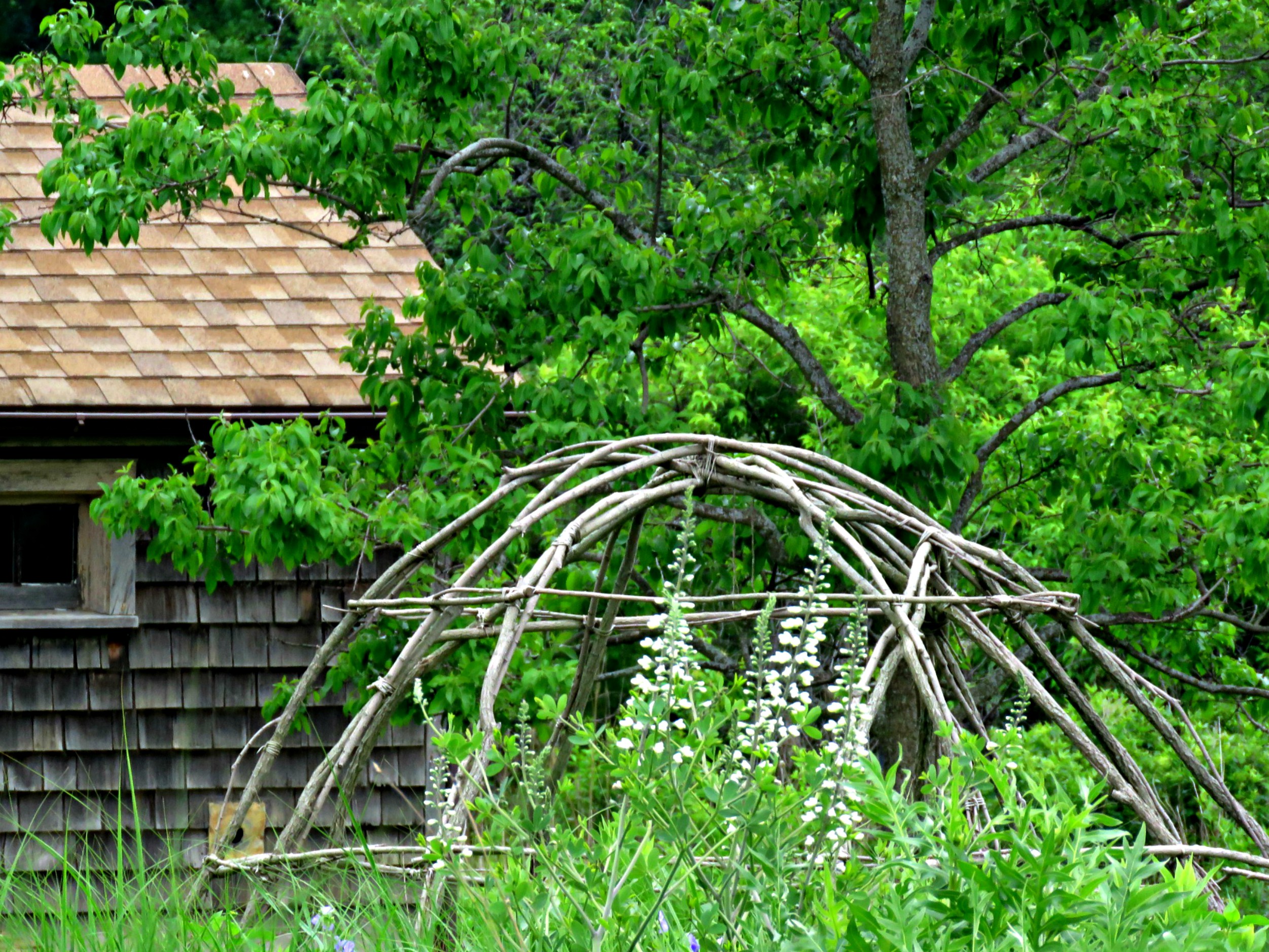
For lunch, we head to the UW-Madison Arboretum. We’ll take our group photo, eat lunch, and then break into groups to tour Curtis Prairie, the site of the world’s first ecological restoration; the Native Plant Garden, home to plentiful native grasses, wildflowers, and pollinators; and the Longenecker Horticultural Gardens, a 35-acre collection of trees, shrubs, and vines, and more than 2,500 kinds of plants, including more than 100 species of Wisconsin native woody plants.

Next, we head to Fitchburg, south of Madison, to visit the garden of Rita Thomas, who started gardening at her current location 35 years ago, when she “knew nothing about plants or garden design.” A plant collector, Rita seeks out the unusual, the best of the species, or the latest introductions. A couple of years ago, she added 20 new trees and 15 herbaceous peonies to her garden. She also tends orchids, native woodland plants, daylilies, and irises.

The former Flower Factory nursery, now the private garden of Nancy and David Nedveck, is our next destination. Near Oregon and Stoughton, the Nedveck’s property is expansive. Once home to more than 4,000 perennial varieties, the nursery was one of the premiere garden centers of the Upper Midwest. Begun by the Nedvecks in 1984, the nursery was enlarged in 1988, and was a common stop for bus tours. Nancy and David closed the business in 2020, and have been scaling back, although they still garden and sell plants at the Dane County Farmers’ Market.

Our final stop of the day will be the grounds of Epic Systems, near the suburb of Verona. Epic is one of the healthcare industry’s leading information technology companies, serving many of the world’s largest hospitals and healthcare systems. Our tour leader will be one of the gardens’ landscape designers, Jeff Epping, of Epping Design & Consulting. It’s hard to describe this place because it’s so unique. Among other things, we’ll see gravel gardens, storybook gardens, and expansive prairie/savanna views of the surrounding countryside.

(Note: We won’t be back to the hotel until after 7 p.m. We won’t be serving an evening meal, so be sure to stock up on snacks and plan to stop at a restaurant near the hotel when we get back.)

Saturday, June 25

6 to 9:30 a.m.: Sleep in, if you wish. This will be a slightly more relaxed day. You’re on your own to tour the Dane County Farmers’ Market, just a block from our hotel, from 6 a.m. until 9:30 a.m., when we’ll load the buses for our day’s events.

A hearty brunch at the Goodman Community Center, on the near East side of Madison, will be the fare mid-morning. The Goodman Center is a private, nonprofit that serves the entire community through programs such as early childhood education, its TEENworks high school program, older adult activities, and many others. We’ll be served through the center’s Working Class Catering participants—a “classroom” of young people who work and learn alongside food service professionals.

After brunch, you have a choice: You can walk a half-mile portion of the Capital City Trail to Olbrich Botanical Gardens, our next destination. Or, you can ride the bus to Olbrich. If you walk the trail, you’ll see community gardens planted and tended by area residents. Plan for about 10 to 20 minutes, depending on your pace. If you take the bus, you’ll have a little more time at Olbrich.

Olbrich Botanical Gardens is a nationally recognized botanical garden. It was voted one of the top 10 most inspiring gardens in North America by Horticulture magazine, and it has received the American Public Gardens Association’s Garden of Excellence Award. Among other highlights is Olbrich’s Thai pavilion, a gift to UW-Madison from the Thai government and the Thai chapter of the Wisconsin Alumni Association.

After our Olbrich visit, we’re off to tour three Madison private gardens, not necessarily in this order:

Linda Brazill and Mark Golbach moved to their half-acre lot 28 years ago, as it was a perfect canvas on which to create a garden: a sloping site with trees and shrubs mostly at its edges. Their goal was to walk out their back door and be in a tranquil retreat, marrying the contemplative qualities of Eastern gardens with the pines and perennials of Wisconsin. They’ve planted some 200 trees and shrubs, and used more than 200 tons of stone in walls, paths, and boulder groupings. The garden has real and symbolic water features, unusual trees and conifers, a birch glade, woodland peonies, and a Japanese teahouse.

Cindy Fillingame added her first raised bed in 2004, out of a desire to improve the garden’s drainage. She chose concrete retaining wall blocks, which allowed her to create fluid lines and to adjust the height and enrich the soil. As her gardening knowledge has grown, she’s created diverse garden beds that have something to offer in each season of the year. Visitors will see many newly planted trees and shrubs, as well as older established trees and shrubs. Lilies, including Martagon, Asiatic, and Orienpets, join garden sculptures to provide vertical accents among a wide variety of perennials.

Tom and Cheryl Kuster have been gardening at their current property for 22 years. The yard had been professionally landscaped in 1968 when the house was built, including a small pond and waterfall. In 2004, the Kusters asked Steve Lesch, of Landscape Designs Nursery, to help them create a new plan. Tom describes himself as a “collector of plants,” with more than 600 different varieties. The garden is divided into 20 sections—each with its own genera of species. Areas include miniature and dwarf conifers; a Tufa rock garden with various alpines, hens and chicks, and woodies; and a Japanese garden.

We’ll end the day at the Concourse Hotel for our banquet and auction. Be prepared for some fancy fixings, socializing, and fun with gardening giveaways.

Sunday, June 26

8 a.m.: Time to load buses, bright and early again, for another day full of amazing garden tours. We start on Madison’s east side for tours of two unique gardens.

Ann Munson, who’ll be joining us for her first Fling, has been gardening at her current Monona property for 43 years. She started with a small vegetable garden, and gradually expanded to include all of her ¾-acre suburban lot—it now has no lawn, and paths wander throughout a collection of sun and shade gardens. More than 250 trees and shrubs—all but six of the trees on the lot—were planted by Ann and her husband. Wood chip paths connect the gardens of sun and shade. Two ponds and a connecting stream provide water for wildlife and stimulation of the senses. Ann recycles as much from the land as possible, and incorporates interesting items as she finds them.

Jane and Duane Miller have an urban garden within Madison’s isthmus that showcases very creative use of a small lot. During the growing season, they repurpose their driveway as a pathway and patio into the garden. Plants in rolling pots—along with garden furniture, portable fences, planters, and umbrellas—come out to form a wonderful dining and entertaining space. Since many things are on wheels, they can rearrange spaces or create a parking spot, if needed. A wood pergola on one side and a secret garden nestled between two garages in back form the other garden rooms. A colorful bowling ball collection lines the front garden. Arbors and fencing divide the property into gardening “rooms” filled with colorful annuals, dramatic foliage plants, and decorative surprises around every corner.

Before lunch, we’ll make a quick stop at Kopke’s Greenhouse, in Oregon. The business, which started in the 1980s, now has 28 buildings; plentiful garden decorations, tools, and supplies; and more than 1,000 plant varieties of perennials, annuals, and edibles.

Next, we’ll drive to Janesville, south of Madison, to visit Rotary Botanical Gardens. We’ll eat lunch here, and then we’ll be free to roam the gardens at our own pace. Rotary has 20 acres of gardens, with 26 different styles and 4,000 varieties of plants. During our visit, the gardens will have about 38 whimsical turtles for a Garden Art project. Each will be labelled with artist, title, and a short description. Please give credit to the artists if you photograph their work. Volunteers also designed and installed a Story Walk, titled, “Except Antarctica” by Todd Sturgell. It’s about a turtle traveling to Antarctica.

On the way back to Madison, we’ll stop in Stoughton for our two final private garden visits—also very unique!

The garden of Jim Ottney and Jay Hatheway started as an untended field of weeds, an oil change sand pit, piles of old tires, clotheslines, volunteer trees at random locations, and various invasive plants. When they purchased the home and property in the mid-1990s, they turned over the entire lot by hand, and transformed it into a lush garden laced with pathways and seating areas, incorporating a newer central pergola over the original patio, a metal gazebo in the back, a deck overlooking the entire garden, garden art distributed throughout, and a flagstone open space in one section. Jim describes it as a “private escape and a space where we can entertain small groups of friends.”

Janet Aaberg has owned her home for 30 years. The first eight, she had a few basic plantings, but it was after the death of her spouse in 1999 that she started digging gardens, which she’s continued for 22 years. She created one garden at a time, planted one plant at a time, made many mistakes, and has had many successes. She’s taken master gardener training, worked at Kopke’s Greenhouse for a few years, and has belonged to several botanical societies. She now tends 18 large perennial beds, and has a diverse selection of perennials, including 32 varieties of Clematis, some of which should be blooming when we visit.

Photo courtesy Allen Centennial Garden
Our final destination of the Madison Fling is Allen Centennial Garden, on the UW-Madison campus. Located on a cozy 2.5 acres surrounding the historic Dean's Residence, the gardens were designed to complement the home and its existing plantings. The garden is built around a stately Victorian gothic house, which was one of the first buildings on the agricultural campus and served as home for the first four deans. It's divided into 14 distinct areas—from English cottage gardens, to an iris meadow, to a Japanese garden, and a Wisconsin woodland garden. The property serves as an outdoor classroom for UW-Madison students and surrounding communities, providing learning opportunities for visitors of all ages.

** And there’s a small secret surprise at the end…shhh…you won’t know what it is until the end. See you soon in Madison! **

Sunday, April 10, 2022

The Award-Winning Public Gardens of the Madison Fling


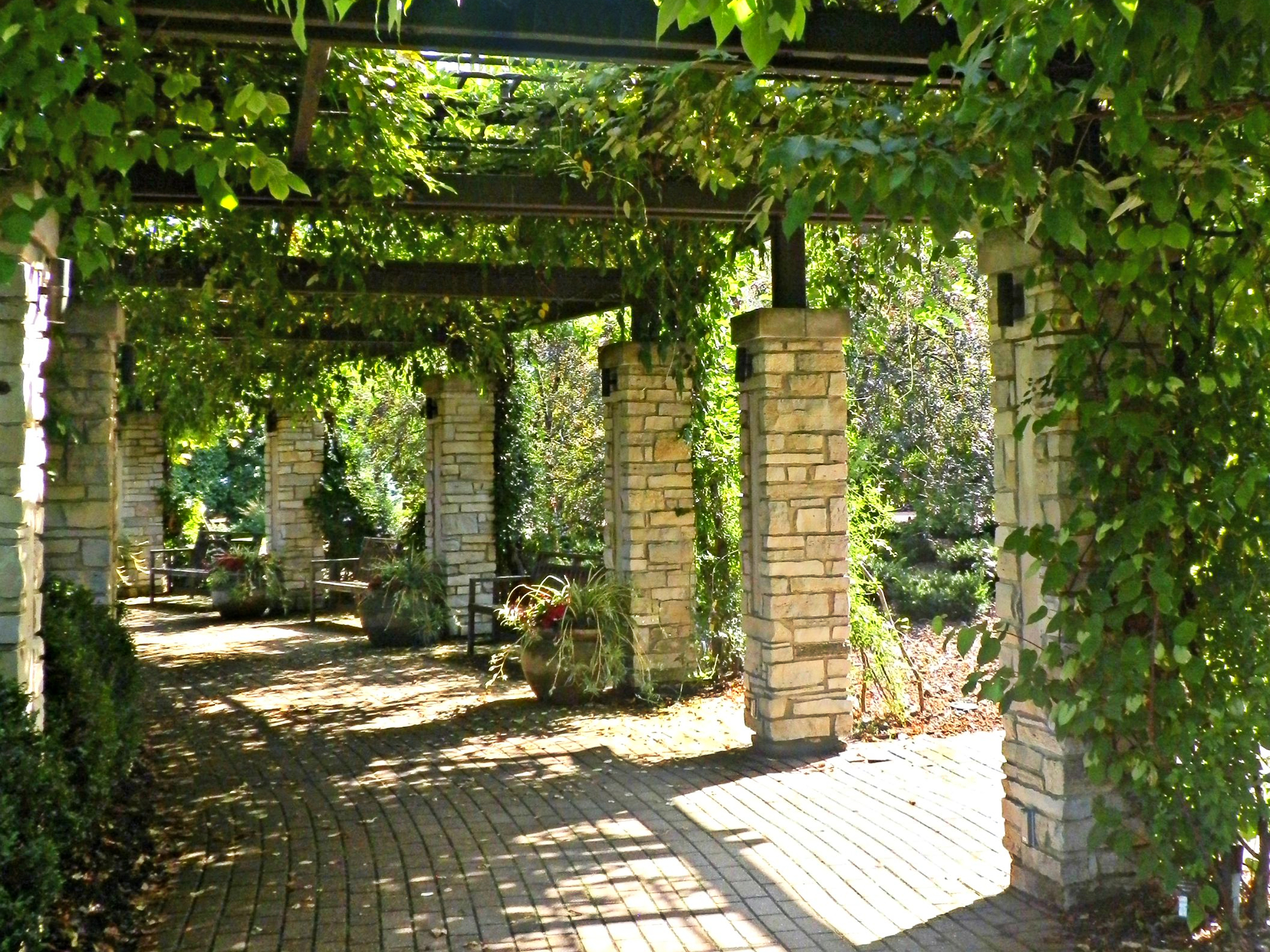
An arbor-covered walkway at Olbrich Botanical Gardens

We’ve recently reviewed the fabulous private gardens you’ll see at the Madison Fling in June, so let’s take another peek at the public gardens on our tour. (Click on the links below to learn more about each garden.)

We’ll start with The Urb Garden and the Rooftop Ramble at the Madison Children’s Museum, the venue for our opening gathering on Thursday evening, June 23. The Urb Garden is a three-season learning area on an outdoor deck. Visitors can learn about aquaponics in a tilapia tank, watch worms turn food waste into rich compost, and observe plant growth in the custom greenhouse-treehouse. And from the Rooftop, visitors get a bird’s eye view of downtown Madison.

Metal archway into UW-Madison Arboretum's
Longenecker Horticultural Gardens


On Friday, June 24, we’ll head to the UW-Madison Arboretum, home of the world’s oldest restored prairie, the Longenecker Horticultural Gardens, the native plant garden including approximately 500 native Wisconsin plants, and an extensive collection of other restored ecosystems. The Arboretum is an oasis of nature surrounded by urban and suburban areas.


Gravel gardens at Epic Systems gardens


Our final Friday destination is Epic Systems gardens, near the suburb of Verona. Epic is a leading healthcare industry information technology company, and the second-largest employer in the Madison metro area. Its campus gardens are whimsical and unique—like a playground of garden types and styles. Epic is on the edge of Wisconsin’s Driftless Area, too, so the views of the surrounding countryside are dramatic.

The Thai Pavilion at Olbrich Botanical Gardens


Saturday midday, June 25, takes us to Olbrich Botanical Gardens, voted one of the top 10 most inspiring gardens in North America by Horticulture magazine. Olbrich’s 16 acres include an indoor, tropical conservatory, and outdoor sunken, perennial, herb, meadow, rock, wildflower, rain, serenity, shade, hosta, birch, rose, and event gardens.

Olbrich’s Thai pavilion and gardens, tucked beyond a winding pathway, are must-see features, too. The Thai pavilion was a gift to the University of Wisconsin-Madison from the Thai government and the Thai chapter of the Wisconsin Alumni Association.
Mixed plantings at Rotary Botanical Gardens


On Sunday, June 26, we drive south, with a stop at Kopke’s Greenhouse, home to plentiful annuals and perennials.

Our midday destination is Rotary Botanical Gardens, in Janesville, Wis. Rotary is a 20-acre, nonprofit community garden, and a National Display Garden for the American Hosta Society, the American Hemerocallis Society, and the Hardy Fern Foundation. It features 26 distinct garden themes and more than 4,000 types of plants.

Train display at The Flower Factory


On the way back to Madison, we’ll stop in at TheFlower Factory, formerly a public garden and once the source of the Midwest’s largest selection of perennials, hostas, and ornamental grasses. The owners still garden, and we’re honored to visit their expansive property.


Victorian house at Allen Centennial Garden


Our final event of the Fling, on Sunday late afternoon, is a visit to Allen Centennial Garden, a cozy 2.5-acre garden in the heart of Madison. The garden is built around a stately Victorian gothic house, which was one of the first buildings on the UW-Madison agricultural campus and served as home for the first four deans. Though compact, this garden is divided into 14 distinct areas. It serves as an outdoor classroom for campus students and visitors, alike.

Our thanks goes out to the personnel at all of these amazing public gardens. They all are wonderful Madison-area treasures!


Visit this link to register for the Madison Fling!

Saturday, April 2, 2022

Sunday's Private Gardens: Colorful, Charming, and Creative


[Note: Dates have been changed for the 2022 Fling. Gardens may vary slightly.]

We’ve previewed the Madison gardens we’ll visit on Friday and Saturday. On Sunday, June 26, we’ll head east and southeast to visit a garden on Madison’s isthmus, a garden in the suburb of Monona, and two gardens in the small city of Stoughton.


Jane and Duane Miller have an urban garden within Madison’s isthmus that showcases very creative use of a small lot. During the growing season, they repurpose their driveway as a pathway and patio into the garden. Plants in rolling pots—along with garden furniture, portable fences, planters, and umbrellas—come out to form a wonderful dining and entertaining space. “Since many things are on wheels,” says Jane, “we can rearrange spaces or create a parking spot if needed. A wood pergola on one side and a secret garden nestled between two garages in back form the other garden rooms in our space.” The couple’s colorful bowling ball collection lines the front garden. Arbors and fencing divide the property into gardening “rooms” filled with colorful annuals, dramatic foliage plants, and decorative surprises around every corner.


Ann Munson has planted more than 220 trees and shrubs, and untold numbers of perennials and annuals, since 1980, in her ¾-acre suburban property. Free of traditional grass lawns, the gardens of sun and shade are connected with rock, stone, and wood chip paths. Two ponds and a connecting stream provide water for wildlife and stimulation of the senses. “I recycle as much from the land as possible, and recycle interesting items as I find them,” says Ann. “My gardens allow me to participate in the ongoing cycle of life—seeking beauty, health, and creativity. I want there to be mystery, excitement, interaction, and health in the garden. I want color, design, natural critters, and the flow of the seasons made real. I want to look out my window at a natural world, and step out my door and do a forest bath.”


Jim Ottney and Jay Hatheway have gardened at their Stoughton home since the mid-1990s. When they bought the house, the “yard” was an untended field of weeds, an oil change sand pit, piles of old tires, clotheslines, volunteer trees at random locations, and various invasive plants. They turned over the entire lot by hand, and beginning with several small beds along the fringes and foundation yews, they transformed the lot. The entire garden is laced with pathways and seating areas, incorporating a newer central pergola over the original patio, a metal gazebo in the back, a deck overlooking the entire garden, garden art distributed throughout, and a flagstone open space in one section. “Gardens can be whatever you imagine,” notes Jim. “We wanted a private escape and a space where we could entertain small groups of friends. We worked within the limits we were given and discovered ways to use foliage variety to create interest.”


Janet Aaberg’s property had just one tree in the back and one in the front when she moved to her home in 1992. “I added a few shrubs and flowers, but it wasn’t until 2000 after a life-changing event that I really started digging,” she says. “Each year, I either enlarged an existing bed or dug up a new one, and I now tend to 18 large perennial beds.” Janet has a diverse selection of perennials including 32 varieties of Clematis, most of which should be blooming when we visit. “You’ll also see garden art mixed into each garden,” she adds. “I have a very sunny, hot location, and with years of planning, I have something blooming from April through November. My slice of paradise is not only good food for the soul, but also for the critters, pollinators, and insects.”

Our private gardeners are looking forward to your visit! Stay tuned for more planned highlights of the 2022 Fling. (Note: This schedule may change; we will keep you updated here and on the Fling Facebook page.)

Thursday, March 24, 2022

Saturday's Private Gardens: Impressive Urban Retreats


[Note: Dates have been changed for the 2022 Fling. Gardens may vary slightly.]

Tours of private gardens are huge highlights of any Fling. Earlier, we previewed the Friday gardens; now let’s take a quick look at the private gardens we’ll visit on Saturday, June 25. These are on the West and near-West side of Madison.


Sue Niesen “started playing in the dirt in 1975" and continues to "love finding worms.” Her gardens include perennials and annuals that she grows in her sunroom from harvested seed from the previous year. “Of course seed catalogs contribute with new species, as I’m curious how they’ll look and grow in my setting,” she describes. “Some not so successful…but I’m always looking for new varieties to add to the gardens.”

Because of the early indoor start, even large plants like Brugmansias bloom in early summer in her garden. Each year, she features a particular annual throughout the garden—something to watch for when we visit. Sue and her husband, Dick, created all the large concrete stepping stones in their garden, themselves, over the course of a year. Whimsical garden gnomes and decorations are found throughout, and you'll find surprises around every corner.


Tom and Cheryl Kuster moved to their home in 1990. The yard had been professionally landscaped in 1968 when the house was built, including a small pond and waterfall. Tom says he didn’t get serious about gardening until 2004 when he asked a local landscape designer to create a plan. “As I started working on the plan and studying various plants, I was amazed at the vast array of plants available for landscaping.

“During the past 16 years of gardening, my focus has been on diversity,” he adds. “You might call me a collector of plants, with more than 600 different varieties. I’ve divided our yard into 20 sections—each with its own genera of species.” Areas include miniature and dwarf conifers; a Tufa rock garden with various alpines, hens and chicks, and woodies; and a Japanese garden.


Linda Brazill (also a garden blogger at Each Little World) and Mark Golbach moved to their half-acre lot 25 years ago. Linda describes it as “a perfect canvas on which to create a garden: a sloping site with trees and shrubs mostly at its edges.

“Our goal was to walk out our back door and be in a tranquil retreat that married the rocks, water, moss, and contemplative qualities of Eastern gardens, with the pines and perennials of Wisconsin,” she adds. To do that, the couple planted some 200 trees and shrubs, and used more than 200 tons of stone in walls, paths, and boulder groupings. Their garden has multiple water features, unusual trees and conifers, a birch glade, woodland peonies, a traffic island bed, and a Japanese teahouse. “As we’ve worked to create our retreat,” says Linda, “we’ve also created a gardening partnership that has been a mutual source of heated debates and delight.”


Cindy Fillingame acknowledges that all gardens are shaped by the terrain, exposure to sun, and drainage concerns, and hers is no exception. A desire to improve drainage led to her first raised bed in 2004. “I chose concrete retaining wall blocks as an inexpensive ‘do-it-myself’ solution,” she says. “They proved to be very versatile, allowing me to create fluid lines, and to adjust the height and enrich the soil. This initial success has led to other raised beds designed to solve other issues—namely gardening on a severe slope and defining the property line more clearly.”

As Cindy’s gardening knowledge has grown, she’s tried to create diverse garden beds with something to offer in each season of the year. The garden features many newly planted trees and shrubs, including ginkgo, oak leaf hydrangea, pagoda dogwood, beech, and stewartia. Older established trees and shrubs include river birch, Montgomery spruce, and a sprawling juniper pruned to follow the terrain. Lilies, including Martagon, Asiatic, and Orienpets, join garden sculptures to provide vertical accents among a wide variety of perennials.

Stay tuned for more overviews of the other private and public gardens to be featured as part of the 2022 Fling. This schedule may change; we will keep you updated here and on the Fling Facebook page.)

Visit this link to register for the Madison Fling!

Saturday, March 12, 2022

Friday's Private Gardens Feature Pathways, Ponds, and Prairies


Linda and Phil Grosz's pond
[Note: Dates have been changed for the 2022 Fling. Gardens may vary slightly.]

We’re thrilled to share some amazing private gardens at the 2022 Fling! Three days aren’t enough to tour every noteworthy garden in the Madison area, but we did our best to cover three general areas:

  • Friday, June 24, we’ll start on the far west and southwest sides of Madison—touring Middleton and Fitchburg gardens;

  • Saturday, June 25, we’ll move a little closer in to the city of Madison; and

  • Sunday, June 26, we’ll venture to the east side of Madison and Monona, then southeast to the small city of Stoughton.

Friday’s gardens present a pleasant mix of gardening styles and types—from edibles to ornamentals, prairies to woodlands, pathways to ponds, and everything in between.


Rita Thomas began gardening at her Fitchburg garden 35 years ago. “I knew nothing about plants or garden design,” she admits. The garden grew and changed as she learned. Rita describes herself as “a plant collector, seeking out the unusual, the best of the species, or the latest introductions. My major interests have been native woodland plants, daylilies, and irises.”

Rita has an extensive collection of daylilies. Her most recent interests are herbaceous and tree peonies: She recently added 20 new tree and 15 herbaceous peonies to the garden. About 14 of her tree peony grafts and many peony seedlings can be found in her nursery beds. “The garden has been my retreat, my laboratory, and my playground,” she describes. “Tending my garden rejuvenates my spirit and my physical body. I welcome all guests to share in my joy.”


Cherith Bruckner’s shady gardens are woven throughout wonderful hickories, oaks, and black walnuts on a corner lot. “The gardens have taken shape gradually over the past 20+ years—from our first efforts of pulling blackcap raspberry brambles and weeds to what has grown into a passion to enhance the woodland setting,” she says. “A lot of ‘terraforming’ played a role in creating a ‘natural’ setting for a water feature that includes a stream, a waterfall, and a pond.”

Over any one of three bridges lie plants and structures, crags and crevices that hold countless surprises and rewards. Vignettes of many shade-loving perennials and shrubs continue to evolve along the woodland paths and water elements. Gardens in the front provide a home for more sun-loving shrubs and perennials, including irises, lilies, and daylilies.


Betsy True and Danny Aerts describe their one-acre property as “the functional yard. We’ve been gradually improving it with garden, orchard, and woodland settings. A large, fenced vegetable garden occupies the main center.” They are “serious about vegetables—using  market garden techniques, raised beds, rotation, elevated bins, and containers.”

Pears, quince, espaliered apples, and various small fruits are distributed around the garden. There are chickens at one end of the yard and bees at the other. A prairie covers the side yard, and a pond lies just off the sun porch on the other side. “There are many diverse micro-environments,” explains Betsy. “We landscape with an eye for insect nutrition and habitat, extended bloom for the bees, habitat for small animals, and edibles for the house. It’s a work in progress and a joy to keep improving and trying new things.”


Linda and Phil Grosz built their home 22 years ago. Our goal was to transform our large, vacant lot into a beautiful, tranquil, and wildlife-friendly environment,” describes LindaOur first project was planting an acre of native prairie.

Grown entirely from seed, the prairie soon surrounded the yard with an abundant and colorful mix of wildflowers and grasses. A stream cascading into a large pond was the next landscape feature they installed, and it has become the focal point of the back yard and a magnet for visiting birds. Over the years, we’ve added thousands of spring bulbs and perennials, large shade and hosta gardens, as well as a rock garden, herb and vegetable gardens, and a new miniature garden, she says. We’ve also assembled a diverse collection of conifers, Japanese maples, and garden art. Join us on the back deck, and enjoy the view of our pond, prairie, and the adjacent golf course.

Stay tuned in the weeks ahead for overviews of the other private and public gardens to be featured as part of the 2022 Fling. (Note: This schedule may change; we will keep you updated here and on the Fling Facebook page.)

Visit this link to register for the Madison Fling!

Friday, January 3, 2020

Olbrich Botanical Gardens: A Midwestern Horticultural Treasure


Olbrich's rose garden; photo by Jeff Epping

On Saturday, June 25, Madison Fling attendees will have the pleasure of visiting a nationally recognized botanical garden. Among its many accolades, Olbrich Botanical Gardens was voted one of the top 10 most inspiring gardens in North America by Horticulture magazine, and it has received the American Public Gardens Association’s Garden of Excellence Award.

Sixteen acres of outdoor display gardens and an indoor, tropical conservatory offer plentiful opportunities for horticultural discovery. Outdoor gardens include a sunken garden, perennial garden, herb garden, meadow garden, rock garden, wildflower garden, rain garden, serenity garden, shade garden, hosta garden, event garden, and birch garden.


A sampling of roses

Another highlight, Olbrich’s rose garden, encompasses two acres and showcases a variety of roses blended with colorful perennials, ornamental grasses, shrubs, trees, annuals, and spring-blooming bulbs. This part of the garden is drawn together in a prairie-style design, inspired by Frank Lloyd Wright, with a 30-foot tower and fountains built into native stone.

The rose garden celebrates the beauty and adaptability of hardy and environmentally friendly shrub roses. This garden embraces the climate and gardening challenges of the Upper Midwest and creates a sustainable rose garden in all seasons. Some of these roses likely will be blooming during our visit.


The Thai Pavilion


Olbrich’s Thai pavilion was a gift to the University of Wisconsin-Madison from the Thai government and the Thai chapter of the Wisconsin Alumni Association. UW-Madison has one of the largest Thai student populations of any U.S. college or university. Amazingly, the pavilion is able to withstand Wisconsin’s winter weather with no protection because it’s constructed of plantation-grown teak and weather-resistant ceramic roof tiles. The gold leaf, however, is delicate and unable to withstand the oils of human hands.

The Thai garden surrounding the pavilion emulates a lush, tropical garden with Wisconsin-hardy plants. Ornamental grasses, some reaching up to 12 feet tall, and several hardy bamboos create a tropical look. Large-leaved shrubs and trees are pruned to emulate the appearance of plants in a typical Thai garden.


Butterflies in the gardens

Throughout the gardens, we’re likely to see pollinators of all types, including monarchs and other butterflies. Native plants, including host plant milkweeds, and nectar-rich annuals invite impressive numbers of monarchs to the gardens during the spring, summer, and fall.

Olbrich is a great place for butterfly sightings and counts, generally, and more specifically for viewing migrating monarchs in the late spring and early autumn.


Gravel garden

Another unique feature at Olbrich is its gravel gardens—inspired by designs by Roy Diblik, perennial plant expert and author, and Jeff Epping, Olbrich’s director of horticulture. Once established, gravel gardens require very few resources: next to no weeding, watering, or fertilizing. They incorporate native, drought-tolerant plants with deep roots that eventually reach down below the thick surface layer of gravel.

Olbrich has several gravel gardens throughout its property, including one at the entrance and another featuring pathways and all-weather Adirondack chairs. These are great locations to observe bees and other pollinators enjoying the plentiful, nectar-rich perennials.

As described in its vision statement, Olbrich Botanical Gardens is “a locally treasured and globally renowned source of beauty and education celebrating the importance of plants in a sustainable world.” Our visit during the Fling is sure to be a highlight of our event.

Friday, December 20, 2019

Epic Systems Campus: Whimsical, Anomalous, and Beautiful


One of the more unique destinations on our itinerary for the Madison Fling is a visit to the Epic Systems campus, near the suburb of Verona, on Friday, June 24.

Epic is one of the healthcare industry’s leading information technology companies, serving many of the world’s largest hospitals and healthcare systems. One in two Americans is covered by a hospital that uses Epic Systems to run its software, and Epic is the second-largest employer in the Madison metro area.


But aside from being a big company with a big campus, it's also a whimsical place—inside and out. We won't be going inside during our visit, but we're thrilled to be able to tour the incredible outdoor gardens, led by Jeff Epping, one of the property's lead landscape designers.


Jeff is a proponent of gravel gardens, and his influence is on display at the Epic grounds, along with unique sculptures and succulent and drought-tolerant plants.

That's just the start of it, though.


The buildings on the campus range from a castle to a tree house to a large barn. Signage directs you to the fanciful destinations.


While varied and playful in many areas of the property, the gardens are actually quite beautiful, too—there's something for every gardener here. It's like a playground of garden types and styles.

Last but not least are the are the amazing prairie/savanna views of the surrounding countryside. You won't want to miss it; truly a one-of-a-kind destination.


Friday, December 13, 2019

UW-Madison Arboretum:
Renowned for Research, Restoration, and Natural Beauty


One of the most beloved natural areas in the Madison area is the UW-Madison Arboretum. Located only about a mile south of the city center and the UW-Madison campus, the Arboretum comprises 1,200 acres of preserved natural spaces.

The Arboretum property encompasses several unique features, including:

• The world’s oldest restored prairie;
• An extensive collection of other restored ecosystems;
• The Longenecker Horticultural Gardens; and
• A native plant garden surrounding the visitor center.

We’ll be visiting the Arboretum on Friday, June 24, as part of the 2022 Garden Bloggers Fling. Among others, three ecological thought-leaders are dedicated to the Arboretum's work and gardens: Karen Oberhauser, director, who’s also a monarch butterfly expert; Susan Carpenter, native plant gardener, and an expert on the endangered rusty-patched bumblebee; and David Stevens, the Longenecker Gardens curator.

Native plants likely to be blooming/peaking during mid-June at the ArboretumTradescantia ohiensis, Geranium maculatumAnemone canadensis, Aquilegia canadensis, Baptisia alba, and Rosa spp., among many others. We’ll miss the peak of the horticultural garden's crabapples, lilacs, and magnolias, but there may be a few late-blooming lilacs and magnolias.


In addition to its natural beauty and recreational opportunities, the Arboretum is also a place of learning and research. UW alumnus Aldo Leopold, known to many as the father of wildlife ecology, said the aim for the Arboretum was to re-establish the “original Wisconsin” landscape and plant communities that had been lost due to European settlement.

Leopold, who was research director at the time of the Arboretum dedication, along with the Arboretum Committee introduced the new concept of ecological restoration.

The Arboretum is an oasis of nature surrounded by urban and suburban areas. Its stated vision: acting as a “global source of knowledge of and a model for restoring ecologically sustainable relationships between people and the land through integrative, innovative, and collaborative approaches in science, stewardship, education, and public engagement.”

Join us as we explore the UW-Madison Arboretum at the 2022 Fling.