Thursday, July 10, 2014

Fling Preview: Chickadee Gardens

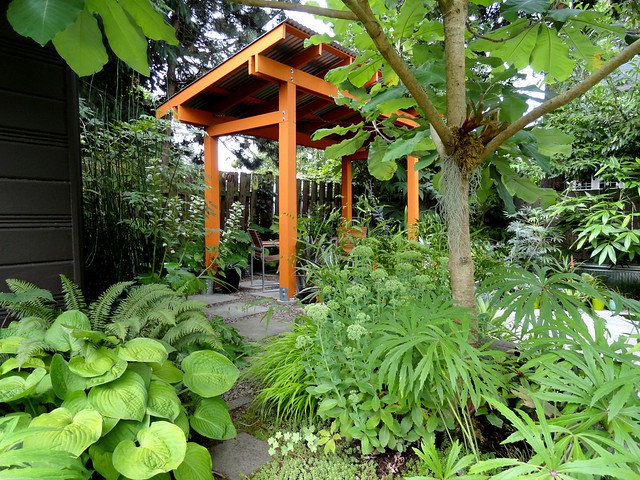
Chickadee Gardens (1280x960)
What exists today is a relatively new and small urban garden on a typical Portland lot (50 x 100 feet).


I am proud to be certified “gold” by the Backyard Habitat Certification Program (which is a collaboration between Portland Audubon and the Columbia Land Trust).


In the garden, you will find some 200 species of Pacific Northwest natives, plus dozens of species of hardy perennials arranged mostly by color, none of which are invasive.


The garden is cram-packed with plants (a bit of an addiction, especially living so close to so many great nurseries) and also contains many enticements to attract wildlife: bird baths, thistle, sunflower and suet feeders, brush piles, mason bee houses, a bat house and many pollinator flowers.


My primary interest is balance - visually balancing the many garden areas and maintaining a pesticide-free, healthy habitat for our native birds and insects, as well as for family and friends. I love experimenting with textures and colors and freely add to the garden when I feel it contributes to the big design picture.


In my attempts at balance, like any other gardener, I have experienced many mistakes. I am quite happy to toss out the old and go with the new—if it fits within the parameters set forth by the Backyard Habitat Certification Program and enhances the garden in some way.

LinkyGraphic copy

Wednesday, July 9, 2014

Fling Preview: JJ De Sousa


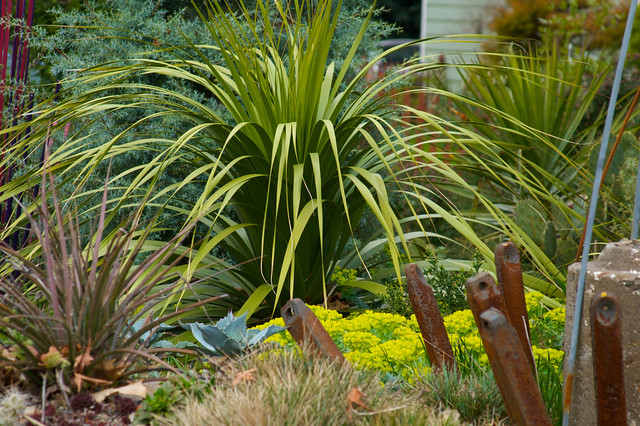
Our garden has two distinct personalities with one common goal. One personality is lush, soft and shady while the second personality is hot, dry and spiky. Both serve to expand indoor living space into outdoor areas with a focus on entertaining.


The shady front garden is a space to get out of the sun and appreciate the lush plantings including grasses, hydrangeas, gunnera, bletilla, hellebores, conifers and a collection of 30-plus varieties of hostas.


The back garden is a place to soak up the sun in an architectural space featuring a collection of over 40 varieties of agave and cactus and a small orchard of olive trees. Entertaining spaces include a courtyard with a fireplace, numerous dining areas and an outdoor living room with emphasis on beautiful, colorful furniture, outdoor textiles and great lighting for the evening.


Our garden is truly unique and we are excited to share it!

LinkyGraphic copy

Tuesday, July 8, 2014

Fling Preview: Danger Garden

.
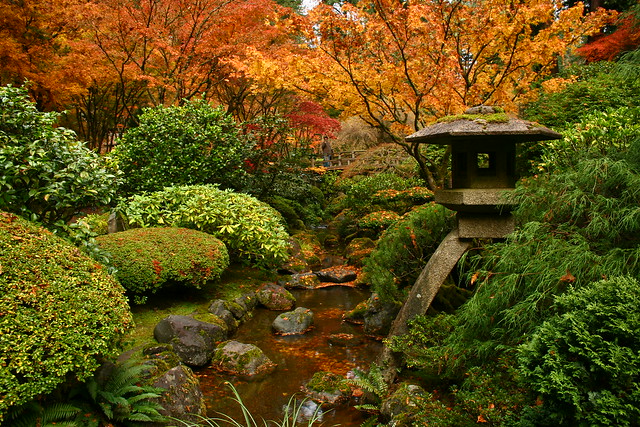
I am a proud practitioner of the “crammit” style of gardening, bare ground = room for another plant. This is a collector’s garden with little attention paid to what style- purists might think. The hardscape helps to control the chaos, however in the words of Amy Stewart, my garden is just the place where I put my plants - meaning design principles lose out to plant lust every time.


Little remains of the garden we inherited, which was primarily lawn with narrow planting beds. The front garden you see today dates to 2011 when I was forced to start over after losing the structural plantings (phormium and cordylines) in back-to- back horrible winters. This part of the garden is designed to require minimal water and maintenance, while summer brings more color, it’s meant to largely be the same no matter the season.


Work in the back garden began summer of 2007 with construction of the retaining wall and patio. The shade pavilion (which doubles as a sort of greenhouse in the winter) was added in 2009 and more lawn removed (to expand the planting beds, again) in 2013.


This spring, 2014, several over-grown shrubs (small trees) on the north side of the property were removed and a new fence built – changing the entire feeling of the space. The exposed “openness,” as well as the loss of several established plants (winter) has me struggling to feel connected to the garden again. As usual I’ve responded to the challenge by over-planting...

LinkyGraphic copy

Monday, July 7, 2014

Fling Preview: McMenamins Kennedy School

7097114687_69f1d43e9a_b
Since its 1915 opening, this historic elementary school has been a beloved fixture of its NE Portland neighborhood. Shuttered by the school district in ’75 (due to declining enrollment and age of the building) McMenamins launched its renovation in the spring of 1997, infusing the 80-year-old structure with new life, and reopened Kennedy School in October 1997. Now it’s OK to sleep in class and smoke in Detention, a unique and fun lodging, dining and meeting experience.


The property had very little growing on it before McMenamins began creating a garden. The plants could almost be counted on 2 hands:
4 Maples (2 Norway and 3 Bigleaf), 3 Western Red Cedars, 1 Douglas Fir, 2 Japanese holly, 1 Rhododendron sp., 2 ancient and near dead Kwanzan Cherry.

The most mature “new” shrubs and trees were planted in 1997 and 1998 with layer after layer of new garden space or paved space (courtyard, bike rack, etc.) added bit-by-bit at the expense of existing lawns. A second driveway into the parking lot was removed and converted to a xeric planting in 2009.


A new hotel wing and surrounding garden space (including a roof-runoff collection swale) was completed in late 2012.

The edible plant collection continues to expand, but diversity in a small space is the goal. McMenamins gardens, not just at the Kennedy School, but Edgefield, Cornelius Pass Roadhouse, Grand Lodge, Rock Creek Tavern, Anderson School (soon), and Wilsonville, to name a few, are meant to inspire, entertain, soothe, nourish, and embrace everyone who visits them!

LinkyGraphic copy

Saturday, July 5, 2014

Fling Preview: Portland Japanese Garden

IMG_2488.JPG
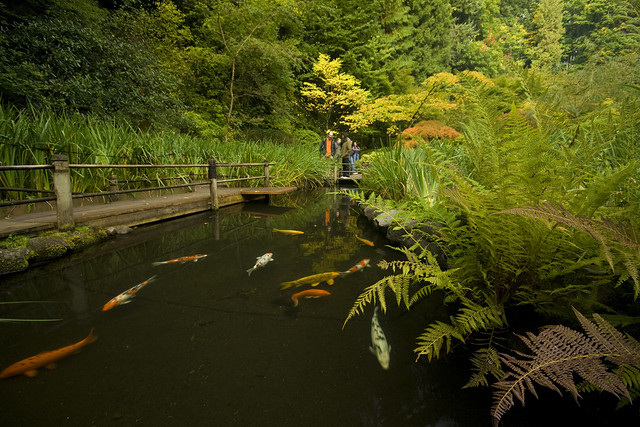
The 5.5 acre Japanese Garden is composed of five distinct garden styles.
IMG_0173.jpg
When we enter a Japanese garden, the desired effect is to realize a sense of peace, harmony, and tranquility and to experience the feeling of being a part of nature.
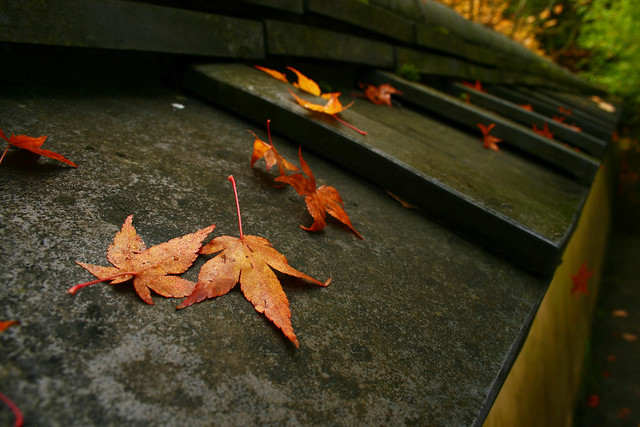
IMG_2340.JPG
In a deep sense, the Japanese garden is a living reflection of the long history and traditional culture of Japan.
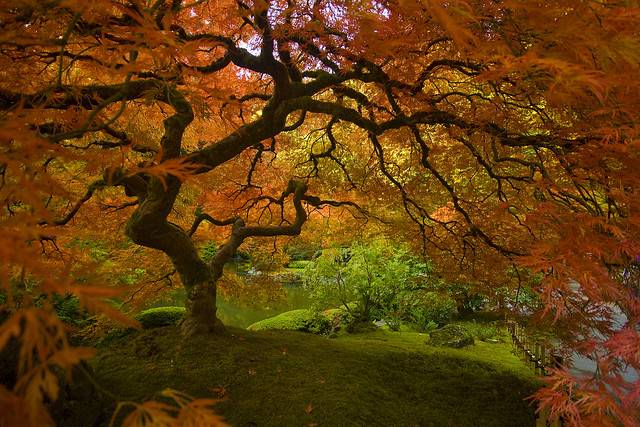
The Memory of Autumn
Influenced by Shinto, Buddhist, and Taoist philosophies, there is always “something more” in these compositions of stone, water, and plants than meets the eye.
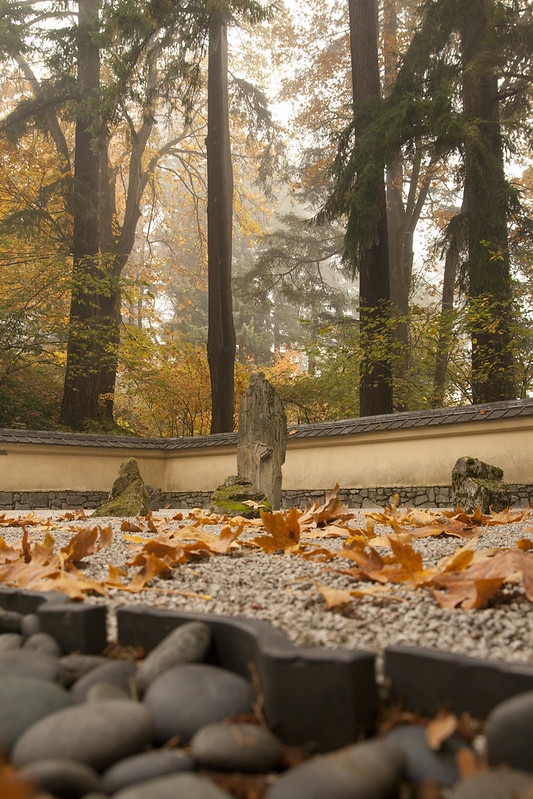
gravel garden
Three of the essential elements used to create a Japanese garden are stone, the “bones” of the landscape; water, the life-giving force; and plants, the tapestry of the four seasons.
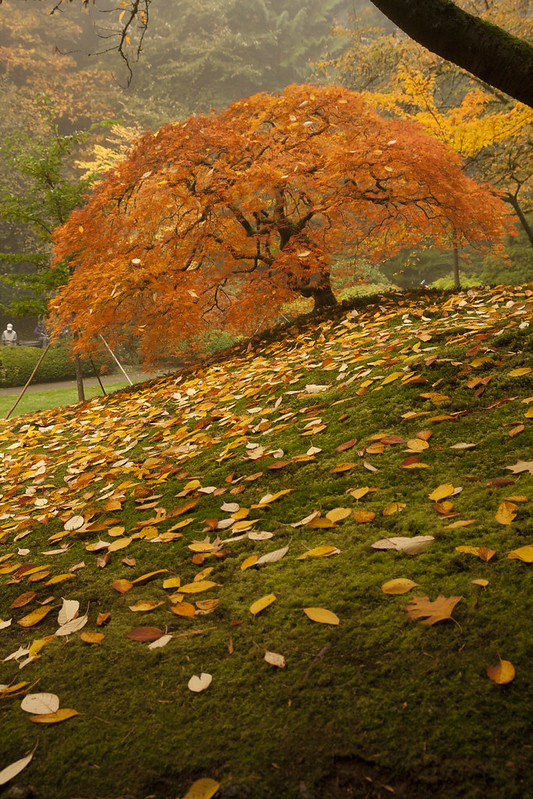
vertical maple with scattered leaves
Japanese garden designers feel that good stone composition is one of the most important elements in creating a well-designed garden.
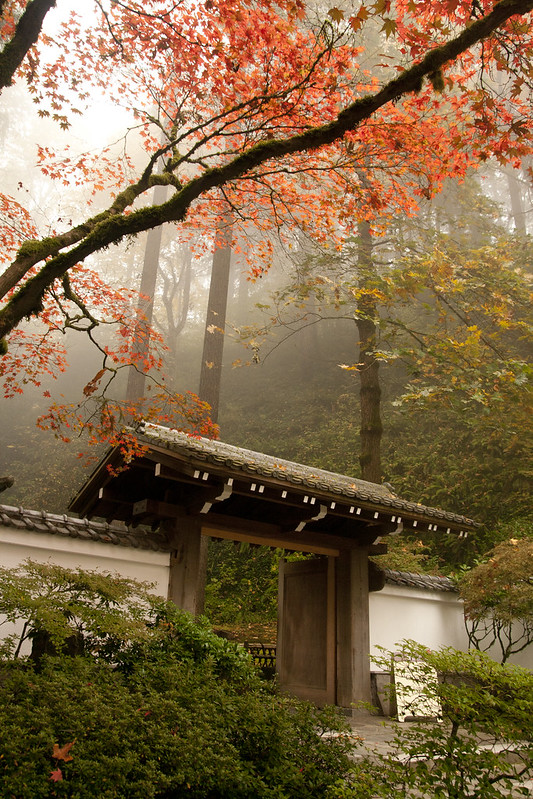
entry in the fog
Secondary elements include pagodas, stone lanterns, water basins, arbors, and bridges.
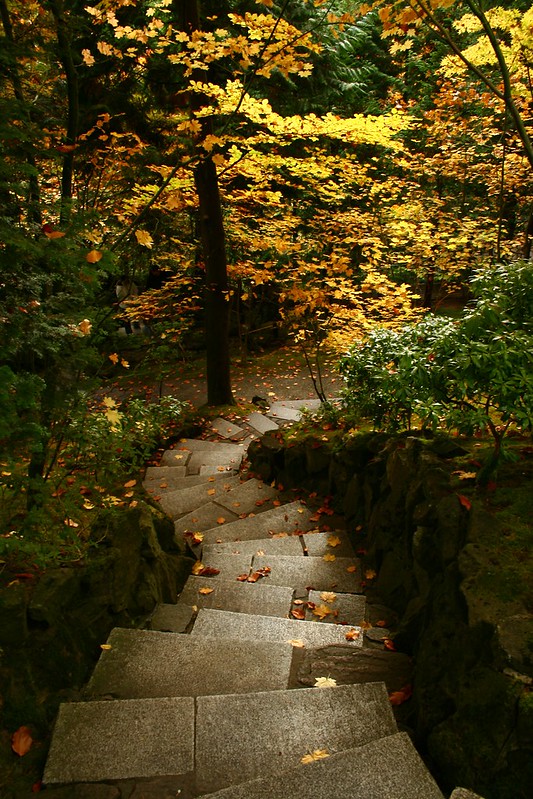
steps v  2911
Japanese gardens are asymmetrical in design and reflect nature in idealized form.
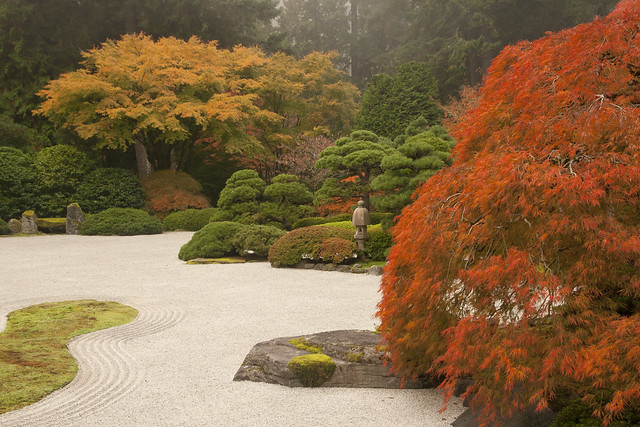
gravel garden h
Traditionally, human scale is maintained throughout a Japanese garden so that one always feels part of the environment, not overpowered by it. However, this garden incorporates some of the tall Douglas fir trees that were original to the site because the designer Professor Takuma Tono wanted to the Garden to blend naturally into the native environment.
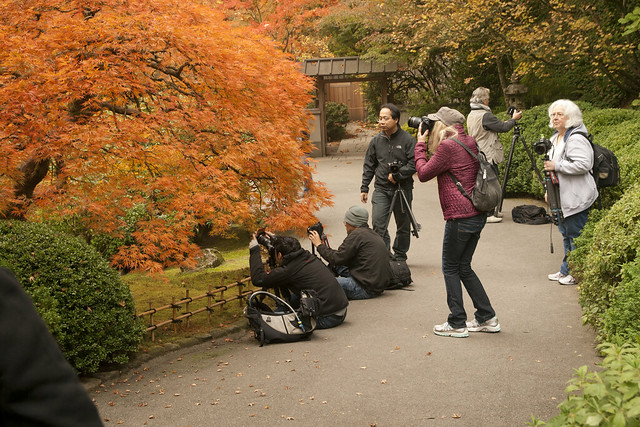
photographers
A few notes of etiquette when visiting the Garden:

· In order to maintain a peaceful atmosphere within the Garden for all of our visitors, we ask that you please keep your voices low.

· We do not allow the usage of cellphones for anything other than photography within the Garden. We ask that visitors turn their phones off, or to silent, and refrain from talking on them or texting while inside the Garden walls.

· If any participants will be using tripods for their cameras, please be sure they are kept on the pathway at all times (please do not place on moss, grass, or other plant material for any reason), but also be sure that they do not block pathways so that other visitors may easily move around you. We will waive the normal $5 tripod fee for your group. For more on our photo policies, please visit this link: http://japanesegarden.com/join-and-support/photographers/

· Please stay on pathways (pavement, gravel, stepping stones, deck, etc.) at all times. Please do not step on grass, moss, or any other plant material.

· There is no eating or drinking allowed in the Garden. Please leave snacks behind. Smoking is not allowed within the Garden, or in the area outside the Gate. We have a smoking area available near staff parking if needed.

LinkyGraphic copy